
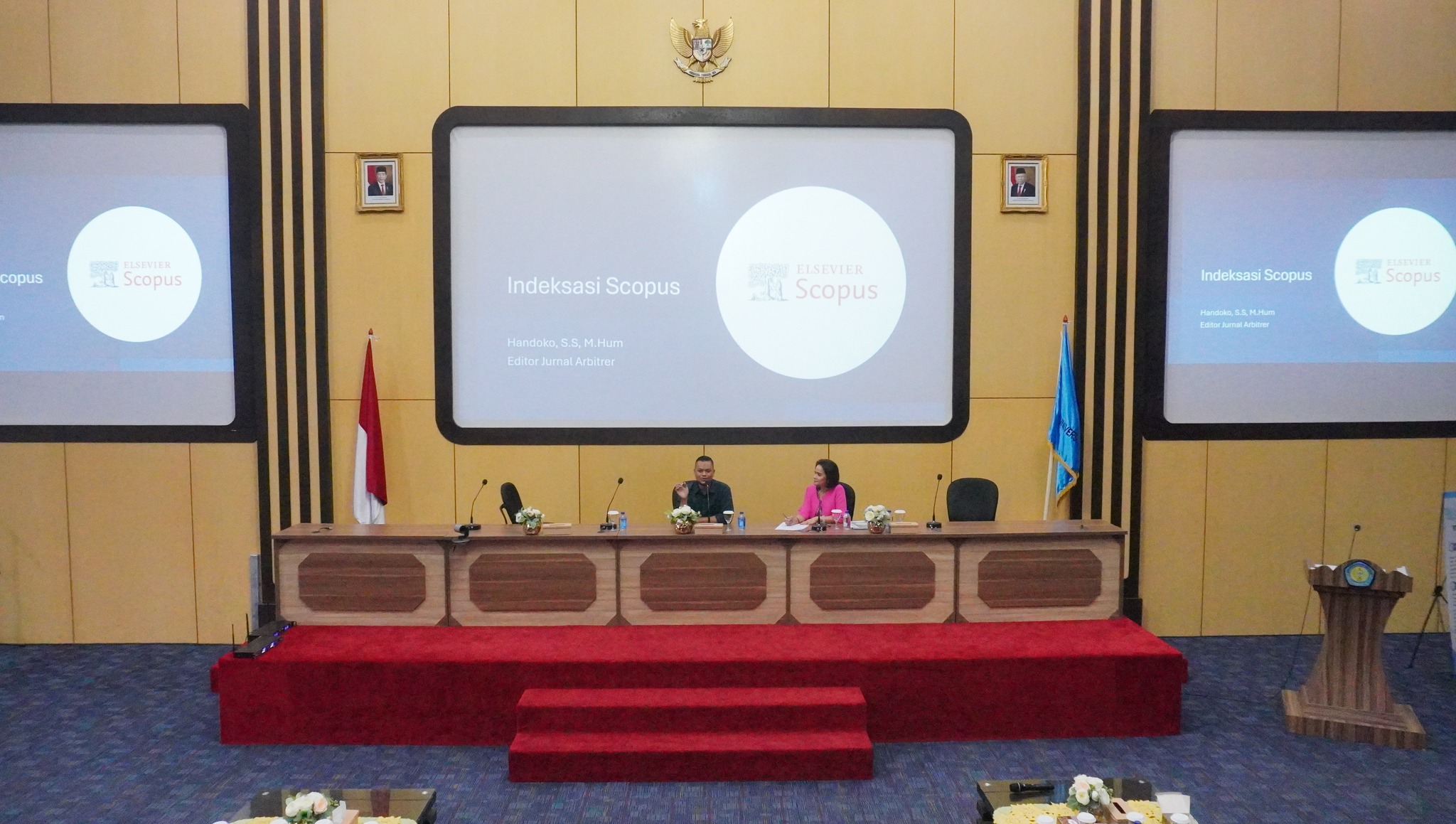
Organized by Relawan Journal Indonesia, in cooperation with Universitas Batam, the event, held on 31 August 2024, gathered journal managers from various regions across Indonesia to learn, exchange knowledge, and enhance their strategies for achieving Scopus indexing.
A Crucial Step Toward Global Recognition
Scopus is one of the largest abstract and citation databases, indexing reputable peer-reviewed journals. It serves as a gateway for scholarly recognition, providing international visibility and credibility to journals. For many academic publications, getting indexed in Scopus signifies that they meet high standards of editorial quality and research output.
During the workshop, Handoko S.S, M.Hum shared his extensive experience and expertise, guiding the attendees through the intricacies of the Scopus indexing process. His session covered a wide range of crucial topics, including:
-
Understanding Scopus Criteria: Handoko outlined the criteria Scopus uses to evaluate journals, such as academic quality, regularity of publication, and the importance of strong editorial boards. He emphasized how fulfilling these requirements can significantly increase a journal’s chance of being indexed.
-
Improving Editorial Standards: One of the key discussions focused on improving editorial workflows, peer-review processes, and the overall publication ethics of journals. By adhering to international best practices, journals can not only aim for Scopus but also improve their overall academic rigor and readership.
-
Practical Steps to Apply: The workshop provided a detailed, step-by-step guide on how to apply for Scopus indexing, including tips on navigating the application process and handling feedback from the Scopus Content Selection and Advisory Board (CSAB).
Collaboration for Greater Impact
The collaboration between Relawan Journal Indonesia and Universitas Batam proved to be a strategic initiative. By bringing together journal managers from diverse regions in Indonesia, the workshop fostered collaboration and knowledge-sharing among participants. This collective effort aims to strengthen Indonesia’s presence in international academia by enabling more journals to meet global standards.
Journal managers who attended the event expressed their appreciation for the opportunity to learn from an expert like Handoko S.S, M.Hum. Many noted that the workshop provided not only theoretical insights but also practical tools and strategies that they could implement immediately to improve their journal’s prospects of Scopus indexing.
A Path Forward
As Indonesian journals continue to grow in number and quality, workshops like these serve as pivotal stepping stones toward greater international recognition. The insights provided by Handoko S.S, M.Hum, along with the support from organizations like Relawan Journal Indonesia and Universitas Batam, will undoubtedly contribute to the elevation of academic journals across the country.
By empowering journal managers with the necessary tools and knowledge, this event represents a major step forward in Indonesia’s academic publishing landscape. The future looks bright as more journals take on the challenge of Scopus indexing, ultimately strengthening the nation’s academic reputation on the global stage.
This workshop highlights the importance of continual education and cooperation among academic professionals to keep up with the growing demands of international publishing standards. It is initiatives like these that will pave the way for more Indonesian journals to make a mark in the global academic arena.