
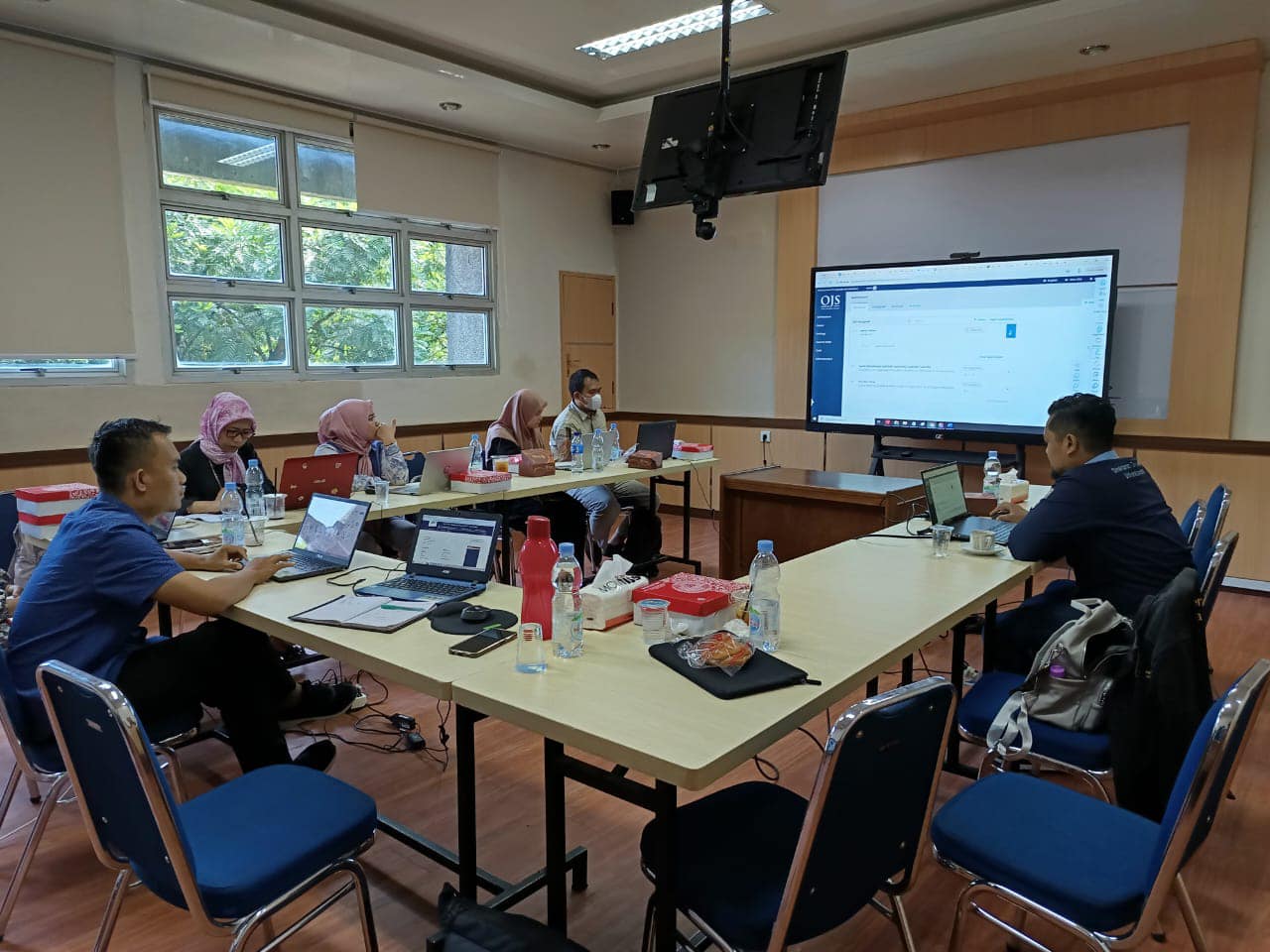
The Open Journal System (OJS) is a powerful tool used by academic institutions and publishers worldwide to manage and streamline the editorial process. It facilitates everything from manuscript submissions, peer reviews, and editorial workflows to the final publication of articles. However, to fully leverage its potential, journal managers need comprehensive knowledge of its features and capabilities.
During the training session, Handoko S.S, M.Hum provided in-depth insights into how journal managers can maximize the use of OJS. The main topics covered during the session included:
-
System Configuration: Handoko explained how to configure OJS effectively to suit the specific needs of the journal, from setting up editorial roles and review processes to customizing user permissions and workflows.
-
Editorial Workflow Optimization: He emphasized the importance of optimizing the editorial workflow to ensure faster processing times for manuscripts. This included automating certain tasks, improving communication with authors and reviewers, and managing deadlines effectively.
-
Enhancing User Experience: The session also focused on enhancing the overall experience for authors, reviewers, and readers. This included improving the journal’s website layout, making the submission process easier, and ensuring that journal articles are accessible to a broader audience.
-
Indexing and Visibility: Handoko also discussed how journal managers could use OJS features to boost their journal’s visibility and accessibility to global databases, ensuring better indexing and citations.
-
Practical Tips and Troubleshooting: The training provided hands-on sessions where journal managers could navigate OJS, solve common problems, and implement the best practices for smooth journal operation.
The training was met with enthusiasm from the journal managers of the Faculty of Agriculture at Universitas Andalas. With a clear understanding of the power of OJS, they are now equipped to streamline their publication processes, enhance the quality of their journals, and reduce the time it takes to publish academic articles.
Many participants praised Handoko’s expertise, stating that the practical knowledge they gained would help them improve their day-to-day journal management tasks. By optimizing OJS, the Faculty of Agriculture’s journals are well-positioned to grow in both quality and reputation.
As journal publishing continues to evolve, adopting modern tools like OJS is essential for staying competitive in the global academic arena. With expert training from figures like Handoko S.S, M.Hum, the Faculty of Agriculture at Universitas Andalas is making significant strides toward strengthening their journals and contributing more effectively to the world of academic research.
This training represents an important step in ensuring that Indonesian journals can compete on the international stage, with optimized processes and improved visibility. With the knowledge and skills gained from this event, the future of academic publishing at Universitas Andalas looks bright and promising.